Resin: GPU-Accelerated Simulation of Strongly Coupled Frictional Contact between Articulated Rigid and Deformable Bodies
 Read the Paper ↗
One constraint stage, every material
Overview
Resin couples a robot and the soft, granular or liquid objects it handles in one problem per time step. Each material keeps the fast GPU solver that suits it; the residual those solvers leave is carried into the coupled solve, so the result does not depend on how far they converged.
Simulating robot manipulation of deformable objects requires coupling articulated rigid bodies with soft solids, cloth, rods, granular media and fluids through frictional contact. GPU simulators usually couple the two weakly, by exchanging contact forces, so that each side responds to the other with a lag. Resin couples them strongly: each time step first advances every deformable body with a solver suited to its material, and then solves one problem for all bodies and the contacts between them. One constraint stage serves vertex block descent, Newton–PCG, projective dynamics, position-based fluids and the material point method, and a matrix-free Newton–PCG iteration with a contact-aware block preconditioner solves it on the GPU. Resin simulates manipulation tasks with Young's moduli from 10 kPa to 200 GPa, most of them faster than real time.
Many materials, one constraint stage
Granular and plastic media, volumetric solids, cloth, rods and fluid, each advanced by its own free-motion solver and coupled to the robot in the same solve.
Two stages, one coupled solve
Free motion per body, in parallel · then every body and contact together
The free motion advances every deformable body on its own, with the GPU solver that suits its material, for a fixed number of iterations. The constraint stage then solves one problem for the velocities of all bodies, robots included, and the contact impulses between them.
Earlier formulations assume the free motion is exact. Resin does not: the momentum residual \(\mathbf m(\mathbf c)\) the solver leaves enters the coupled problem as a linear term,
A deformable solver only has to report its residual and an SPD dynamics matrix. A matrix-free Newton–PCG iteration with a contact-aware block preconditioner solves the problem, and the whole step runs as one CUDA graph.
Inexact free motion, accurate coupled step
Teddy grasp · 79 states · VBD and Newton–PCG free motions
With the residual in the constraint stage, the error of a step stays flat however coarse the free motion is; without it, the error grows with the free-motion gap. Continued from the same grasped state with one VBD sweep per step, the gripper holds the bear with the residual; without it, the bear stretches between the fingers and slips out.
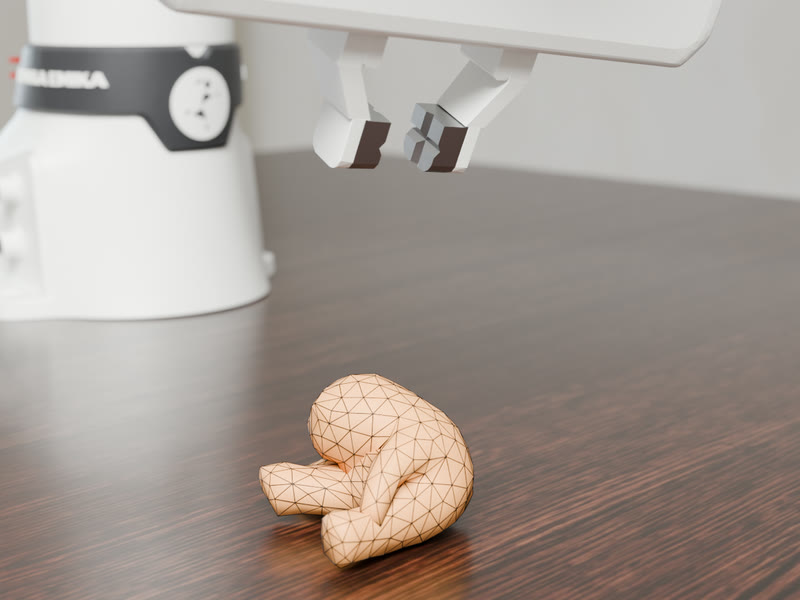
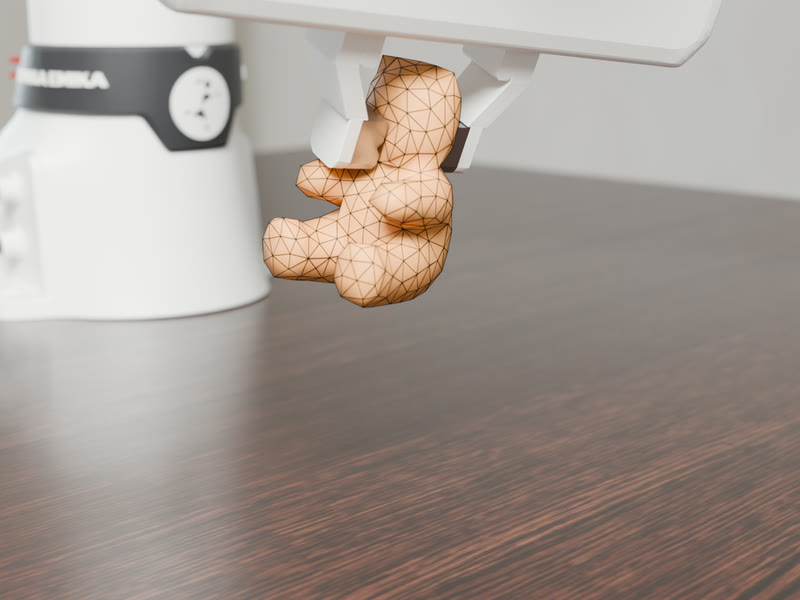
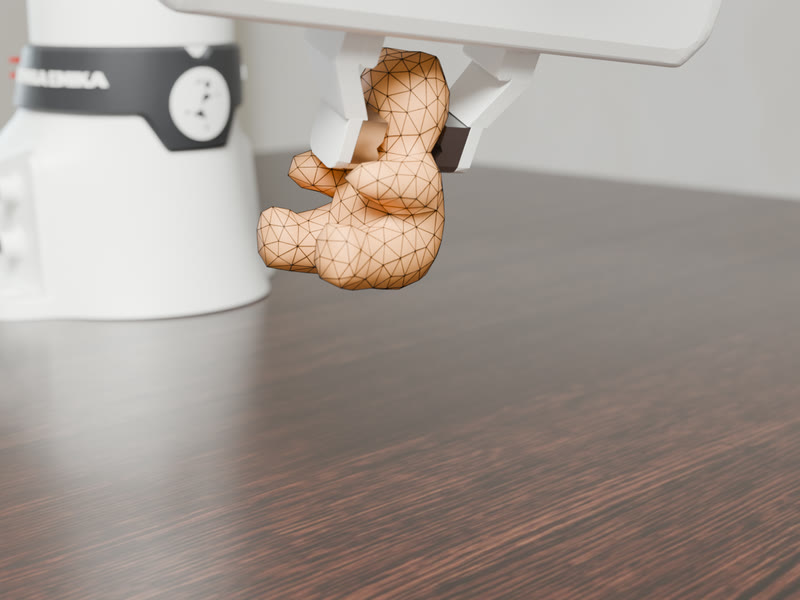
Same state until the fingers have closed (1.40 s), then one VBD sweep per step.
Linearized at the free motion
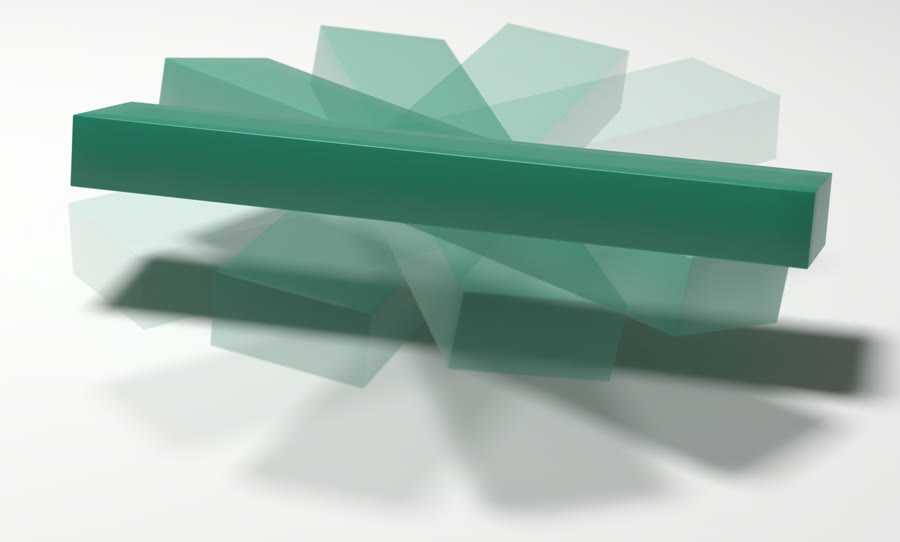
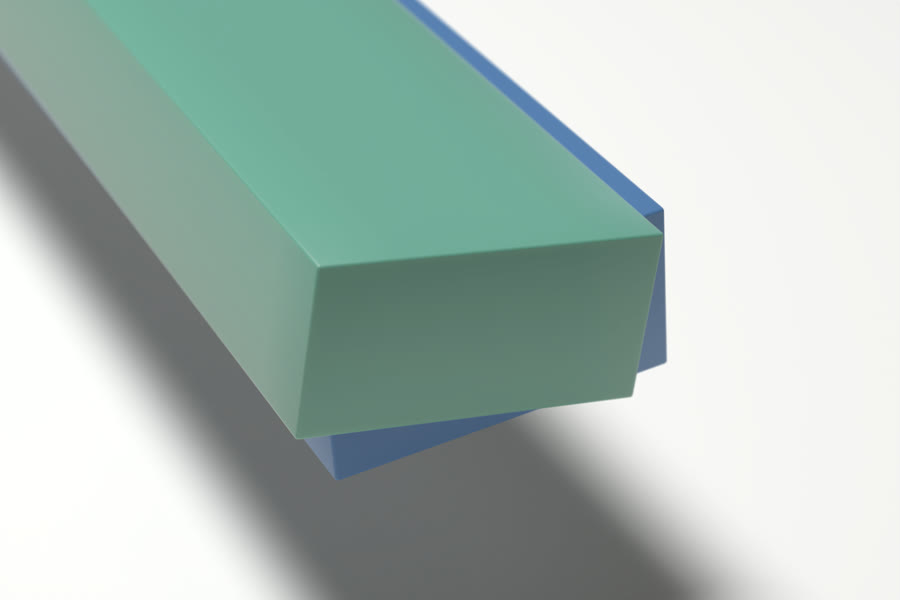
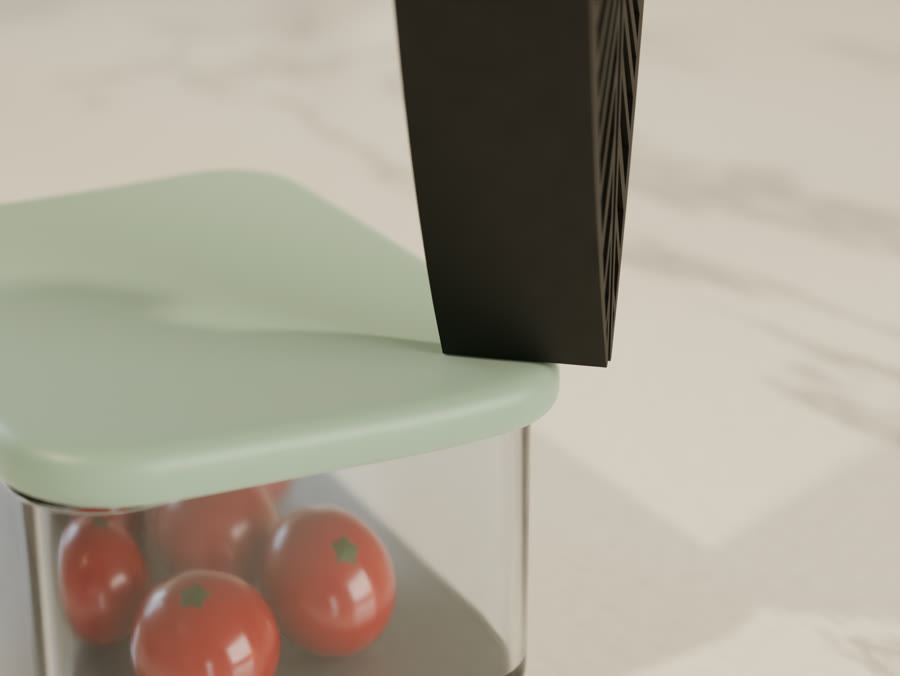
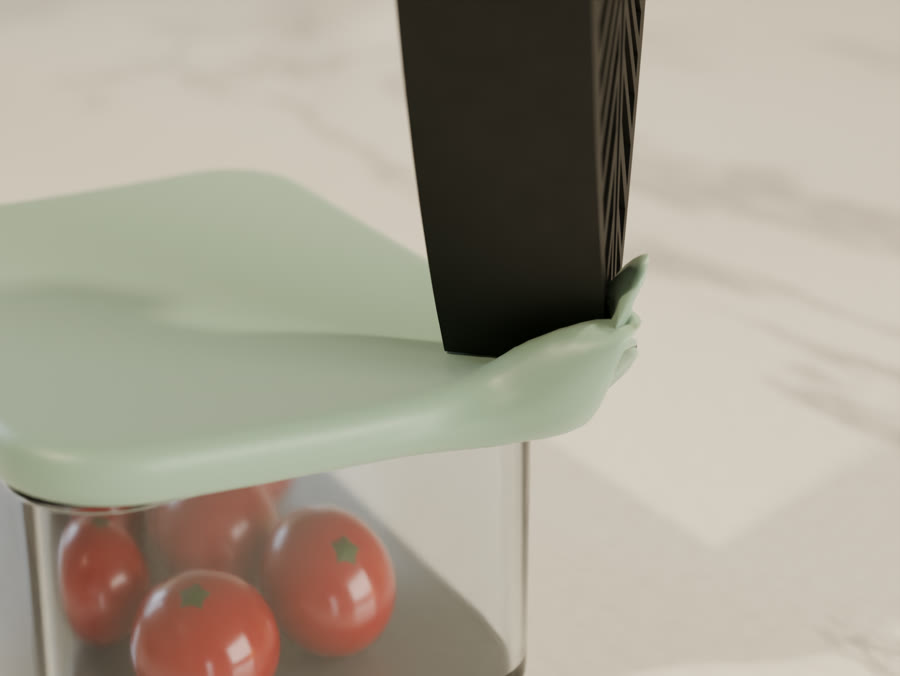
Free spin · lid snap (E = 3 MPa, h = 10 ms)
Resin linearizes the deformable term at the free motion instead of the start velocity. A freely spinning bar stays within 0.05 mm of the reference while the start velocity lets it roll by 13°; on the stiff lid, the start velocity diverges within 60 ms of the corner snapping on, and the free motion completes the task.
Strong coupling holds the grasp
Franka FR3 · 4 cm soft cube · 1 N per finger · μ = 1
The ADMM weak coupling of Newton leaves the cube on the table or drops it at every setting we ran, with MuJoCo Warp or our own rigid solver for the robot. Solving our own problem by block Gauss–Seidel isolates the coupling: its convergence follows 1/(1+χ), with χ the stiffness of the robot–object interface relative to the anchoring of each side.
A preconditioner that sees the contacts
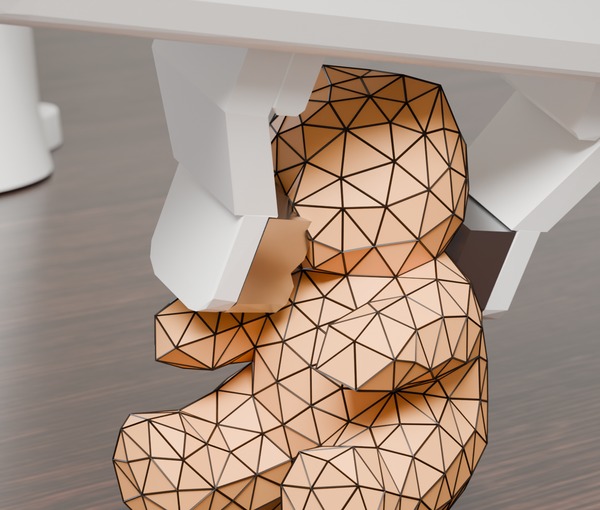
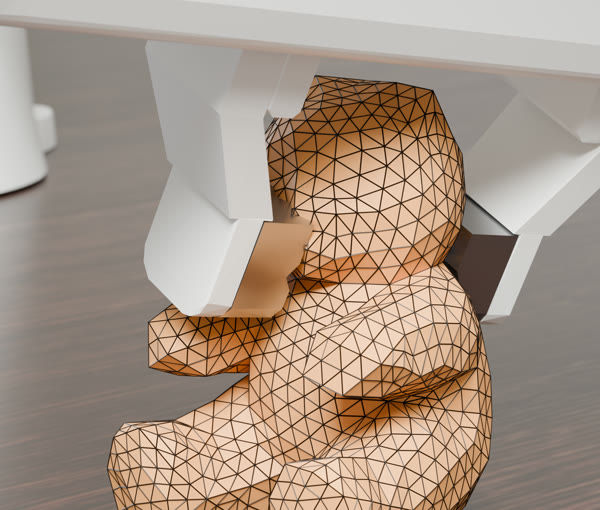
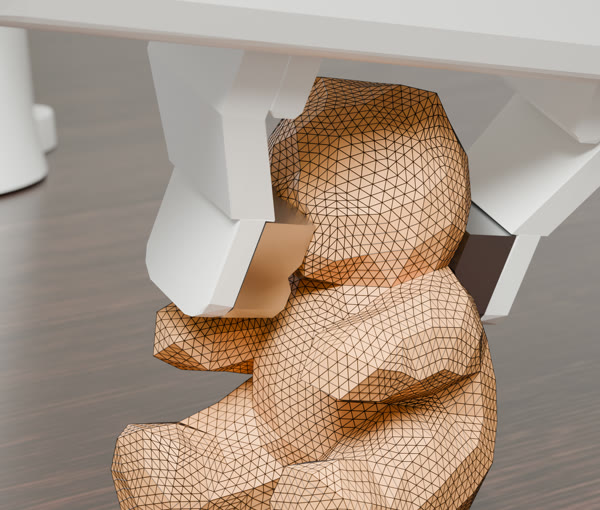
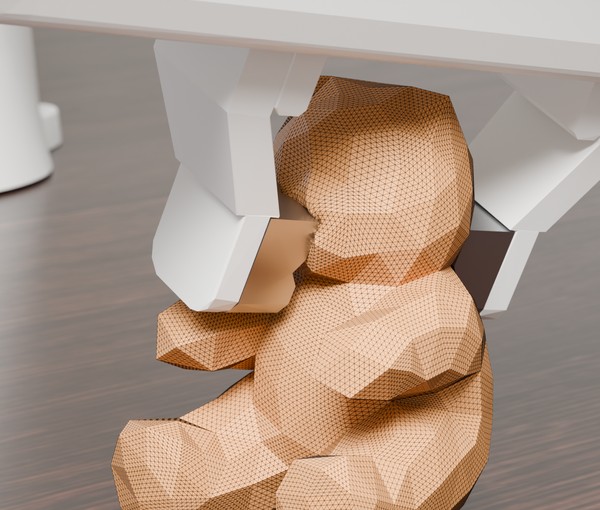
Teddy grasp refined from 1.2k to 340k degrees of freedom
The block preconditioner includes the curvature of the contacts in its kinematic-tree and per-vertex blocks. PCG iterations barely grow with the mesh; Jacobi needs three to seven times as many, and without the contact curvature PCG does not converge on the finest mesh.
Citation
@article{resin2026,
  title   = {Resin: {GPU}-Accelerated Simulation of Strongly Coupled Frictional
             Contact between Articulated Rigid and Deformable Bodies},
  author  = {Anonymous Authors},
  journal = {Under review at IEEE Robotics and Automation Letters},
  year    = {2026}
}